
The healthcare construction industry is evolving rapidly. Construction of healthcare facilities is expected to surge in 2025 and 2026, with projects ranging from major hospital expansions to specialized outpatient clinics. But what’s actually driving this growth? And how are construction and design professionals responding to new demands?
Understanding the trends that define healthcare construction in 2026 helps owners, administrators, and planning teams make better decisions about their projects. These trends reflect deeper shifts in how healthcare is delivered, where care happens, and what buildings need to support modern medicine.
At Roche Constructors, we work extensively in the healthcare sector across Colorado, Nevada, and the western U.S. We’ve seen firsthand how these trends shape project planning, design decisions, and construction execution. Here’s what we’re seeing.
1. The Rise of Outpatient and Distributed Care
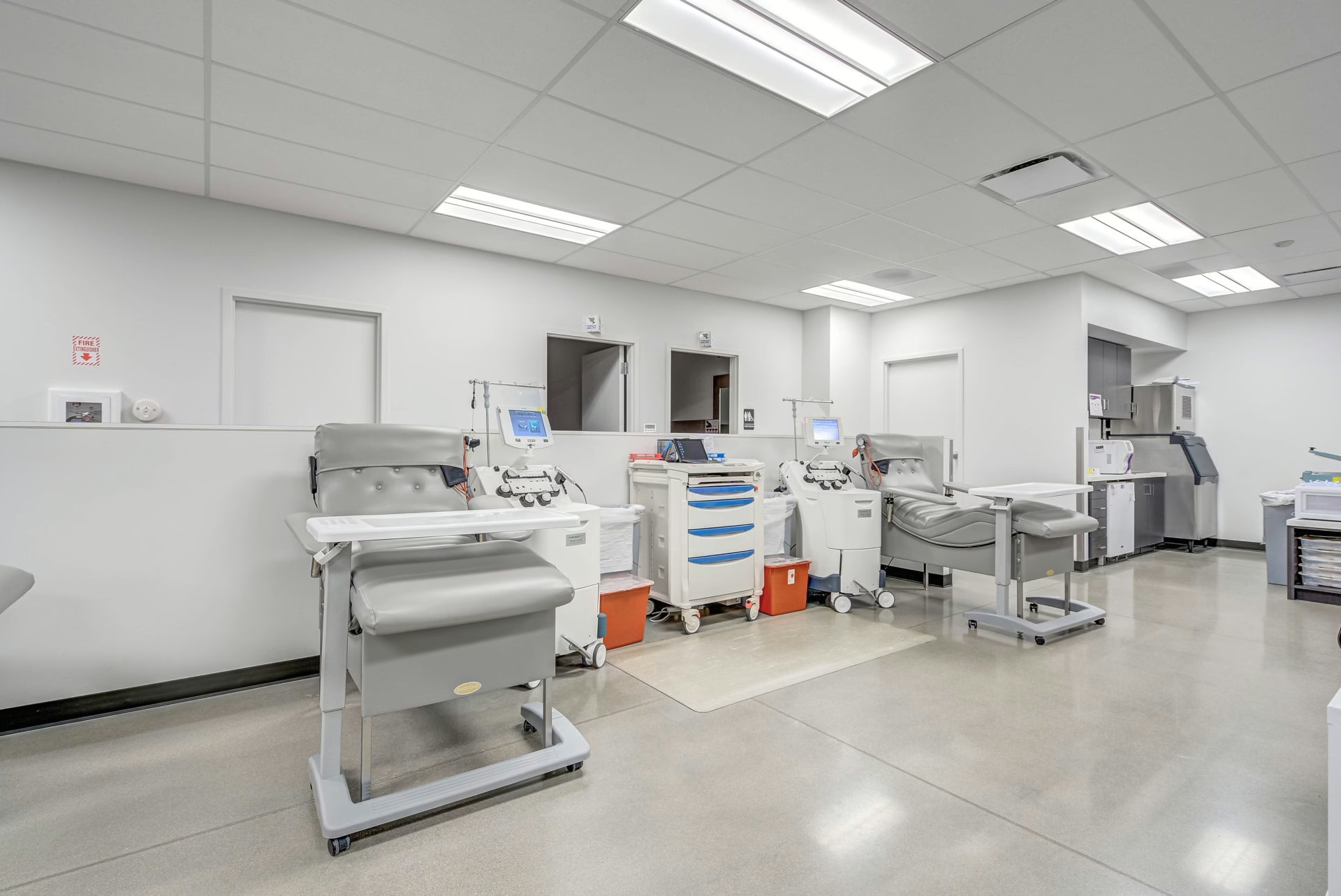
One of the most significant shifts in healthcare construction is the expansion of outpatient facilities. According to <a href=”https://www.bdcnetwork.com/home/article/55150388/us-healthcare-building-sector-trends-and-innovations-for-2024-2025″>Building Design+Construction’s analysis of U.S. healthcare trends</a>, ambulatory care comprises about 30% of total provider revenues—and trending upward. Medical buildings account for over 40% of all healthcare construction. This isn’t just a funding trend. It reflects a fundamental change in how and where patients receive care.
Healthcare systems are moving away from the centralized hospital model. Healthcare is becoming omnipresent and will exist “without walls,” with ambulatory surgery centers, cancer treatment centers, medical office buildings, and acute-care facilities decentralizing healthcare services from main campuses.
What does this mean for construction? Smaller, specialized facilities need to be built faster and more efficiently. They require different infrastructure than traditional hospitals but must still meet rigorous clinical and safety standards. This shift drives demand for contractors who understand both the strategic nature of distributed care networks and the technical complexity of specialized medical facilities.
2. Prefabrication Is Becoming Standard Practice
Speed matters in healthcare construction. According to Building Design+Construction’s report on hospital construction trends</a>, the installation of prefab components valued at more than $200 million is expected to reduce construction time by four to six months for the $1.8 billion, 820-bed inpatient tower at Ohio State Wexner Medical Center in Columbus, scheduled to open in early 2026.
Prefab is now called “the new standard” for hospital design, with prefab components including MEP racking, bathrooms, exteriors, and head- and footwalls becoming standard. Contractors who master prefabrication can compress timelines significantly while maintaining quality and reducing on-site disruption.
Prefabrication also addresses labor challenges. Healthcare construction requires skilled trades, and prefab allows more controlled, efficient work in factory environments before components are installed on site. For healthcare clients managing operating budgets and patient care, faster construction with fewer disruptions is a major advantage.
3. Sustainability and Net-Zero Goals
Healthcare systems increasingly prioritize environmental responsibility. A drive for net-zero health facilities and carbon neutrality reflects growing interest among healthcare providers in meeting meaningful decarbonization targets.
The practical applications are straightforward. Low-hanging fruit of carbon reductions include lighting system improvements and optimizations of existing MEP systems for older healthcare facilities. Major retrofits and new construction projects allow for electric-fueled building systems and less dependency on natural gas, including electric kitchens and domestic water heating systems.
For renovation and modernization projects, this trend opens opportunities. Upgrading aging healthcare facilities with sustainable systems delivers both environmental benefits and operational cost savings over the facility’s lifetime. That’s a powerful value proposition for healthcare administrators managing tight budgets.
4. Infection Control and Clinical Workflow Design
Medical facilities face evolving challenges around infection prevention. Solutions for infection threats are critical to dealing with current challenges such as vaccine- and antibiotic-resistant strains and novel viruses, often supplemented by care providers’ active surveillance and contact precautions.
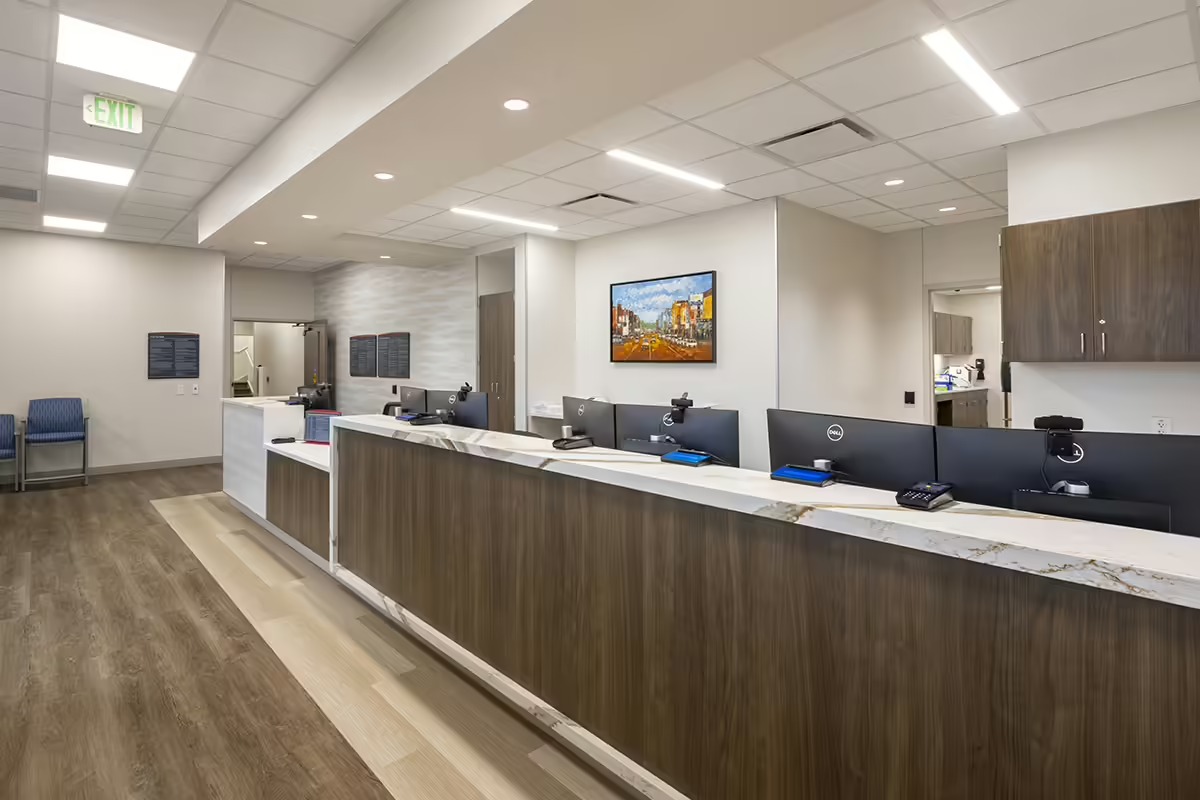
This goes beyond HVAC and air handling. It requires thoughtful space planning, materials selection, and operational design. Clean and dirty zoning, pressurized rooms, antimicrobial finishes, and smart material choices all contribute to infection control. Construction teams must plan for how infection control will be maintained during works, especially in live facilities.
Healthcare construction teams must coordinate closely with clinical staff to understand workflows, anticipate infection risks, and design spaces that support both patient safety and staff efficiency. This level of collaboration is non-negotiable in modern medical construction.
5. Behavioral Health and Community Wellness Focus
The pandemic shifted healthcare priorities. With a growing focus on behavioral health, preventative care and community wellness, facilities are being reimagined to meet immediate and long-term challenges equitably.
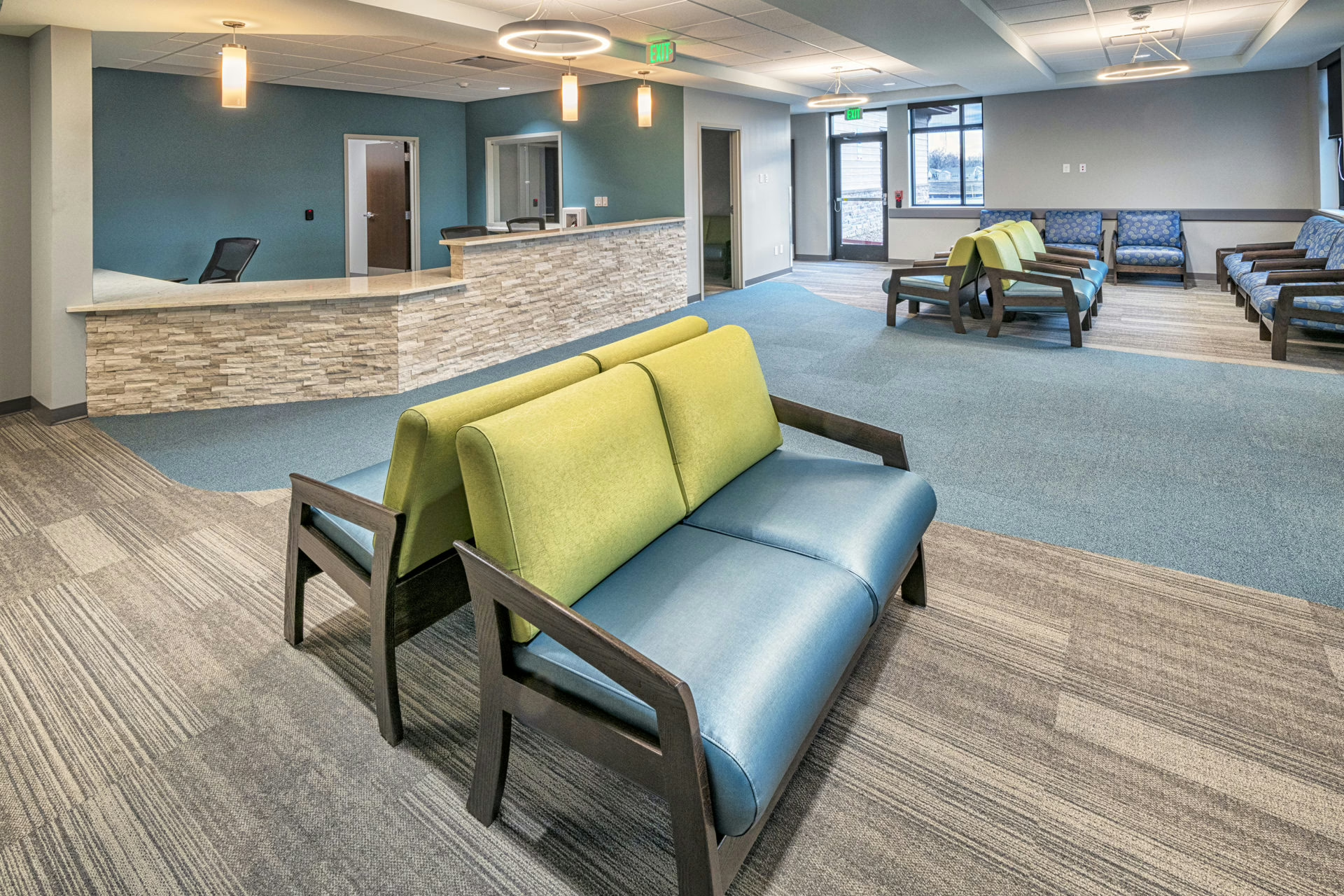
This trend is visible in construction activity. Healthcare systems are investing in dedicated behavioral health facilities, mental wellness spaces, and community-oriented clinics. The design of these spaces differs significantly from traditional acute care. They require trauma-informed design principles, flexible spaces for different care models, and environments that support patient dignity and recovery.
Healthcare administrators recognize that mental health and substance use treatment are essential to comprehensive care delivery. Construction is following that strategic priority.
6. Flexibility for Future Adaptation
Modern healthcare facilities must support rapid change. Hospitals and clinics must support changing models of care, like telehealth or same-day surgery. Projects need scalable infrastructure, like extra risers, ceiling space, and structural load capacity, for future upgrades without major rebuilds.
What looks like over-engineering during construction actually provides strategic flexibility later. Extra mechanical and electrical space, modular room designs, and adaptable infrastructure allow facilities to respond to new technologies and care models without major reconstruction. For healthcare organizations making multimillion-dollar investments, this future-proofing is essential.
7. Resilience and Safety Infrastructure
Healthcare facilities must operate continuously, regardless of external conditions. Critical healthcare systems, such as power, oxygen, and water, must have backups. Healthcare projects often require dual power feeds, emergency generators, and fail-safes built into all essential services.
This requirement extends to environmental resilience. Healthcare facilities in coastal areas or regions prone to severe weather require special design considerations. These aren’t optional extras. They’re fundamental to healthcare facilities’ ability to serve their communities during crises.
What This Means for Healthcare Construction Going Forward
These trends reflect a healthcare industry navigating financial pressures while expanding capacity, improving quality, and responding to evolving patient needs. Construction and renovation projects that succeed in this environment share common characteristics. They’re built on clear planning early, collaboration between clinical and construction teams, and contractors who understand that healthcare construction is fundamentally different from commercial work.
Roche Constructors has decades of experience delivering complex healthcare projects. We understand infection control requirements, clinical workflows, regulatory compliance, and the operational demands of healthcare facilities. Whether you’re expanding outpatient services, modernizing aging infrastructure, or managing construction around active clinical operations, we bring the expertise and discipline that healthcare projects demand.
Ready to Plan Your Healthcare Project?
Healthcare construction in 2026 demands partners who understand both the clinical requirements and the construction complexities. Explore our healthcare construction services, review our project portfolio, and learn more about our approach to healthcare delivery.
Our team is ready to discuss how these trends apply to your specific project and how we can help you deliver a facility that serves your mission.
Contact Roche Constructors today to get started on your healthcare project.